
Real-world economics gains ground in business studies
Right until lately, the initially-calendar year small business and economics syllabus that Carlos Cortinhas had to train could, by his very own admission, “be a drag”. Undergraduates worked by way of textbooks and lectures detailing indifference curves and current market equilibrium, memorising the standard theories and styles of economics to reach the subsequent phase of their levels.
Now, the course taught by the associate professor of economics at Exeter university in the United kingdom consists extra of debate and discussion than rote discovering, and learners communicate about weather modify ahead of they even understand about source and demand.
This novel approach takes advantage of Main (Curriculum Open up-access Means in Economics) — a clean approach to training that grounds economics in the real world.
Begun a decade back and now employed in 310 universities in sixty eight countries, it flips standard economics training on its head, beginning with thorny world wide challenges that issue young folks and exploring how a numerous selection of theories and styles can support address them.
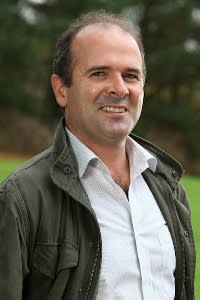
“It’s entirely adjusted how we train,” Cortinhas suggests. “The learners come to be extra engaged, interactive. It is a real pleasure.”
Diverse, useful and available, Main exemplifies a new style of training — 1 that is in particular at home in small business departments.
As small business and administration schooling has grown, so has economics training in small business faculties. This has designed new prospects for analysis collaboration, useful function and training for new audiences — all of which has sown the seeds of clean thinking about a historically conservative and theoretical matter.
“There’s a big difference to how you train economics in a small business college,” suggests Michael Kitson, senior lecturer in worldwide macroeconomics at the College of Cambridge Choose Business enterprise College in the United kingdom. “It’s significantly extra open to pluralistic techniques of thinking it’s only 1 section of a extensive selection of disciplines.”
Kitson appears to be again fondly on many years in which Marxist, Keynesian and neoclassical economists worked side by side, but believes traditional economics departments have lost some of their variety.
Now he feels extra at home in the small business college, in which teachers from a extensive selection of disciplines function on useful issues. “That pluralism in economics departments has gone,” he suggests. “Where that pluralism now exists is in small business faculties.”
A British Academy paper on small business research, introduced last thirty day period, identified that small business and administration is interdisciplinary pretty much above all else — encompassing subjects from finance and economics to sociology and geography, and a big and numerous pupil physique.
In 2019-twenty, 1-sixth of undergraduates and 1-fifth of postgraduates in the United kingdom were enrolled on a small business and administration study course, of whom 39 for each cent were worldwide learners and about twenty for each cent from a black, Asian or minority ethnic history.

Lisa Magnani, professor of economics at Macquarie College in Australia, suggests the broad appeal of small business research has forced economics academics to consider extra creatively.
“A dimension of economics is a absence of variety — the skill to scare ladies absent, or to attract learners from particular sorts of socio-financial backgrounds,” she suggests. “Both at undergraduate amount, and at the MBA amount, we’ve turned economics training upside down . . . the plan is applied and engaged economics.”
Broader audiences and real-world challenges mean economics training should recognise a broader selection of styles and strategies, study course leaders say. Now, equally Generation Z undergraduates and MBA learners are extra most likely to be progressive and socially conscious, if not often economically leftwing.
“If we went again fifteen many years back, MBA learners were principally seeking for the expertise and schooling that would permit them to progress in their occupations,” Kitson points out. “That’s adjusted. More and more, they are wanting to fully grasp the even larger picture in phrases of world wide issues — inequality, weather modify, racism. These are significantly extra outstanding than striving to maximise [their] earnings.”
Progressive sights may well be ever more in demand in small business departments, but they do not often have an easy ride.
In the United kingdom, the College of Leicester faces an worldwide boycott around cuts that meant scientists specialising in critical and leftwing strategies to small business and economics were specific for redundancy.
The university suggests it is putting better emphasis on large knowledge, analytics and synthetic intelligence. It aims to “focus on analysis on present-day concerns in which there is very clear demand from users of analysis and from funders”, to equip graduates with the “relevant expertise to generate optimistic influence around the world”.
On the other hand, David Harvie, a political economist and 1 of all those struggling with redundancy, suggests cuts to critical thinkers have destroyed the risk of a truly numerous and hard small business curriculum at Leicester.
“I consider it will die out,” he suggests. “I experience like some of it is based on the plan that another person who goes to Leicester isn’t equipped to analyze humanities. But appear at folks now rediscovering Keynes, Marx — folks do need background.”
Other educators argue that new types of economics training do not go considerably adequate. At Rethinking Economics, a pupil and academic-led movement to reshape the matter, co-director of operations Tree Watson suggests although the real-world part of Main opens up new perspectives, truly pluralist concept is lacking. “It’s continue to neoclassical economics at the end of the working day,” she suggests.
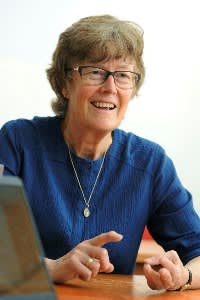
But Wendy Carlin, professor of economics at College Faculty London and a venture director at Main, argues that the new techniques of training economics are staying embraced not just in small business faculties but wherever the matter is taught. With impressive effects, too. A 2020 analyze identified the marks of learners who took Main averaged seventeen for each cent increased than all those who did not observe the syllabus, and not only economics learners felt a increase but also all those learning finance and administration subjects.
Carlin describes the Main approach as starting up not from the assumptions of ideal information and facts and styles, as in traditional economics training, but in the way the real world operates, with all its imperfections.
That, she hopes, will not only make economics extra available for learners, but will also support develop new theories and frameworks for the issues of tomorrow.
“These different ideas of capital and all the measurements of [gross domestic product] arrived out of the Wonderful Despair — we face different challenges now,” she suggests. “There’s an appetite for seriously revisiting how we perspective the economy . . . We’ve shown it’s possible, but there is a ton extra to be performed — and should be for universities to sustain their relevance.”