CFO Job-Hopping: How Much Is Too Much?
While govt recruiter David Arnold and the CEO of a high-profile Silicon Valley organization had been discussing the company’s CFO look for, the CEO explained to Arnold, “If you send out me somebody who has had a ton of limited stops, I’ll be skeptical.” That was a purple flag and her “number 1 pet peeve,” says Arnold, president of Arnold Associates, LLC.
Too limited a tenure at way too quite a few companies — task-hopping — provides vocation dangers like the worry cited by Arnold’s shopper. But how do you determine how a great deal is way too a great deal motion? And are the downsides substantial?
The reply on how a great deal is way too a great deal is subjective and can range from marketplace to marketplace. Organizational consulting organization Korn Ferry reports the common CFO tenure is 4.7 many years, even though the most recent Crist|Kolder Associates Volatility Report sets it a bit greater, at 4.86 many years. According to the Korn Ferry evaluation, the information and facts technological innovation marketplace has the shortest CFO tenure at 4.1 many years, even though the industrial segment has the longest, at 5.
So is any tenure shorter than that task-hopping? Drew Keith, govt vice president and CFO of Dallas-based mostly Texas Protection Financial institution, sees three many years as the bare minimum to stay in a task if the CFO is in the center of their vocation. For somebody possessing just moved up to a CFO function, the bare minimum may be more time, 4 to 5 many years.
Even now, consulting organization Korn Ferry’s Jeff Constable, senior shopper lover and co-direct of the global monetary officers’ apply, cautions in opposition to preconceived notions about way too a great deal or way too small task motion.
“I try out hard to dispel the idea that there’s some form of best variety of moves,” he suggests.
When compared with size of time, possessing been in a crucial placement long adequate to encounter an whole business cycle may be a lot more vital, suggests CFO Keith. “I seem at a specific marketplace, its crucial money factors, and its cycle. Have you been by the complete money cycle for the business relative to that marketplace?” he asks. That can give a choosing CEO and board of administrators self esteem.
 Not all business cycles are of the similar size, of training course. The business cycles in technological innovation are generally more quickly than in other industries. “It’s the pace of transform and the [merger and acquisition] exercise,” suggests Constable. “Plus, non-public businesses are likely public by [special function acquisition businesses] or IPOs or staying bought.” All of people circumstances direct to a lot more organization motion among the CFOs and prompt companies to change CFOs.
Constable suggests that ownership transform from that form of exercise is 1 of the two largest aspects driving CFO departures in any marketplace or product class. A new CEO is the other. And, if there’s likely to be a CFO transform when a new CEO can take about, it comes about most generally in the very first 6 to eight months.
Ownership transform performed a function in Katherine Edenbach’s encounter before in her vocation. Just after working in a array of finance environments at a large semiconductor organization for a lot more than a decade, she accepted a CFO placement at a distinctive organization that was acquired shortly following. She spent only two-and-a-50 percent many years in that function in advance of leaving, but it was for excellent factors.
“I took them by an acquisition and achieved what I required to. It was time to move on and commence about with a different organization,” suggests Edenbach, who is now CFO of fintech Emburse.
These cases make clear why Constable and other individuals say it’s important to seem for the tale driving any purple flags or issues all around the size of stay. Probably the govt manufactured a geographic move for individual factors, or there wasn’t home for progress. The latter is 1 that Constable expects to see a lot more of as businesses do the job to recruit traditionally underrepresented talent into the C-suite.
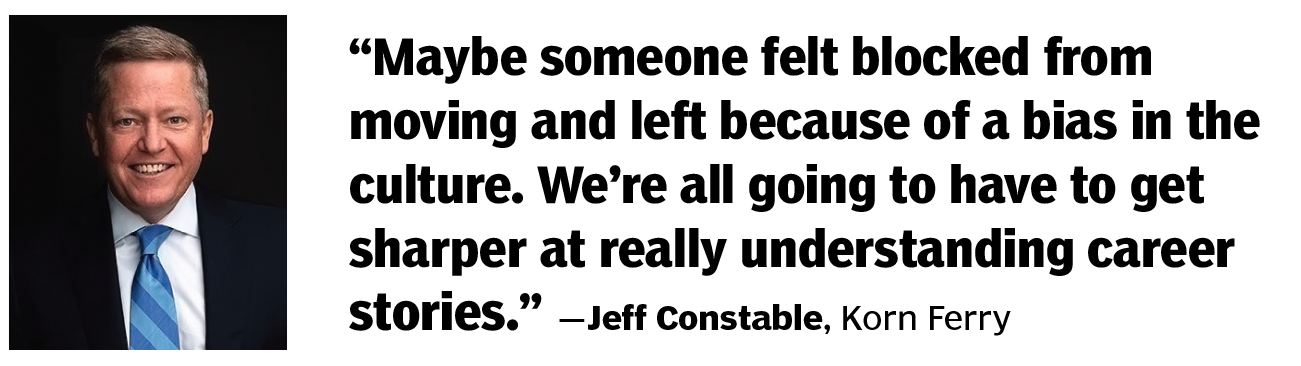
“Maybe somebody felt blocked from transferring and remaining due to the fact of a bias in the society. We’re all likely to have to continue to get sharper at really being familiar with vocation stories,” he suggests.
The Pitfalls
Yet, even when CFOs and recruiters are hesitant to determine what’s deemed task-hopping, they concur that way too a great deal motion in between businesses arrives with tangible and intangible dangers.
Two of the largest, in accordance to employment techniques and litigation legal professional Lauren Paxton, are “job trajectory impairment” and long-expression payment reduction. Paxton, a lover at New York-based mostly Calcagni & Kanfesky LLP, suggests CFOs generally have publish-employment restrictive covenants these kinds of as non-opposition clauses.
“A CFO who hops from 1 task to a different may possibly come across their trajectory impaired by intervals out of the marketplace,” she suggests.
 In addition, most CFO payment packages include limited-expression and long-expression payment. That more time-expression spend, generally limited inventory models and incentive inventory alternatives, may acquire three to 5 many years or more time to vest.
“CFOs will typically forfeit the unvested and limited portions of their long-expression payment when they resign. As a result, the reduction of sizeable incentive payment really should be weighed in opposition to the elevated limited-expression payment a new task may possibly provide,” Paxton suggests.
Other dangers are considerably less tangible. Essential among the them are the fears elevated about a CFO candidate’s judgment. Men and women realize when a finance main leaves a leadership function immediately after — or even twice — due to the fact the organization wasn’t a excellent fit. But when it goes further than that threshold and cannot be explained by mitigating aspects that include staying promoted, adhering to a mentor, or transferring to a different geographic area for individual factors, it’s “a fatal flaw,” suggests recruiter Arnold.
“What form of judgment is this individual doing exercises? Are they making excellent conclusions? This is significant due to the fact the CFO is a crucial adviser to the CEO and board of administrators,” he suggests.
Because CEOs and boards also want CFOs with the formative encounter of possessing been aspect of a crucial undertaking or initiative from starting to close, task-hoppers who cannot exhibit that have restricted vocation progress opportunities, Arnold adds. “Even if they weren’t the CFO, we seem for candidates who had a distinguished function supporting a organization go from X to Y.”
Not Enough Time
There is also the downside that task-hopping does not let a finance leader to stay with a organization long adequate to turn out to be immersed in means that assist create strategic pondering competencies.
“It’s hard to turn out to be strategic if you continue to keep transferring from 1 organization to a different. You do not get to discover what drives the organization or turn out to be a lover to the operations facet of the business,” suggests Emburse’s Edenbach.
One CFO cautions in opposition to viewing recent way too-temporary tenures way too harshly, although. Citing the February/March 2021 CFO short article “10 Important Roles for CFOs” and the business pressures related with the COVID-19 pandemic, David Neaves, CFO of Lendmark Money Providers, suggests some of his friends are enduring burnout. The CFO function demands a lot more competencies than it did a decade back, he notes, and even though remarkable, it can also be exhausting.
“Business has turn out to be a lot more seriously reliant on technological innovation, and it is shifting a lot more immediately. I do not have to be an skilled in all aspects of a company’s technological innovation, but I do have to realize the core technological innovation,” Neaves suggests, including, “That discovering is 1 a lot more aspect of your day for which you have to come across the time.” Toss in the disaster administration joined to the global pandemic, and it’s not unconventional to see friends leaving their C-suite positions to recharge, investigate, and re-aim, he suggests.
Just do not do way too a great deal of that, cautions Korn Ferry’s Constable.
“There are folks in determination-making capacities — board members and CEOs — who can have a bit of an allergic reaction to way too a great deal motion,” he suggests. “No issue how nicely explained the transitions are, they may possibly not want to listen to about it.”
Sandra Beckwith is a freelance business author.