
Pushing boundaries: the rise of German business schools
Just one of Germany’s main business universities sits awkwardly in Berlin amongst the reconstructed Humboldt Discussion board museum sophisticated and a rose garden planted by Margot Honecker, an ex-instruction minister and spouse of the last chief of communist East Germany.
The European Faculty of Management and Technological innovation, founded to train the country’s capitalist elite, is based mostly in the previous point out council office of the defunct German Democratic Republic. It is replete with retro lights, hammer and compass emblems and a stained-glass window portraying the leftwing intellectual and revolutionary Rosa Luxemburg.
Its environment replicate the distinct earlier attitudes to business enterprise and education in Germany. But in the two many years considering the fact that ESMT’s development, much has improved in the country, its firms and attitudes to administration, bringing about a flourishing enterprise education sector with ambitions to contend with international rivals.
“For a extensive time we did not have an global organization faculty in Germany on the similar level as Harvard, Insead or IMD,” remembers Gerhard Cromme, the industrialist who chaired the team of executives who established ESMT in 2002. “We ended up sending our people to the US, the Uk, France and Switzerland. In the late 1990s, we arrived with each other and reported let us do something about it.”
In the US, United kingdom, Canada and Australia, several universities introduced business faculties throughout the 20th century. Other nations such as France and Spain as a substitute opened independent private establishments which designed sturdy worldwide reputations.
But Germany was slower to produce small business colleges. Just one motive was the 19th-century legacy of the Prussian students Wilhelm and Alexander von Humboldt, right after whom the museum complicated near ESMT is named, claims Claus Rerup, a professor of management at the Frankfurt College of Finance and Management, which was established in 1957 as a expert teaching academy for banking institutions.
“They concentrated on the value of training to build autonomous earth citizens relatively than to offer you slim expert teaching,” he suggests. The result was the domination of community, no cost universities decoupled from small business training and without having selective admission procedures for pupils.
“What is lacking is an elite training in Germany. Soon after the second planet war, the prevailing spirit was that college instruction must be open to everyone,” argues Markus Rudolf, dean of WHU — Otto Beisheim University of Management, a private small business university proven in 1983 in Koblenz and now with a second campus in Düsseldorf. “That spirit has not transformed. Elite is a lousy term,” he provides.
Both adult males stage to a conservatism and suspicion of company as an academic self-discipline in the country’s general public universities. “The dominance of the general public establishments is way too big,” states Jörg Rocholl, president of ESMT. “There was totally various governance that did not allow for for the emergence of earth-course company universities.”
Joachim Lutz, the dean of the enterprise university at Mannheim college, a uncommon exception of a condition institution which opened its possess college in 2005 — albeit with a individual authorized position — points to broader structural explanations. German providers centered on giving apprenticeships and providing in-household training for administrators relatively than recruiting from organization faculties, he argues. “During the postwar financial wonder, the task industry was great and the instructional system did not want to seem in other places,” he suggests.
Moreover, several of the country’s largest and most productive businesses were industrial and manufacturing groups in sectors this kind of as substances, tools and autos. That intended employees with engineering instruction — as very well as law, specified Germany’s strong legalistic lifestyle — ended up the focus of recruitment and promotions.
“Often the best technological specialists were being promoted to management. Germans thought that understanding about administration arrived only as a result of expertise,” suggests Hiltrud Werner, a previous board-amount executive at Volkswagen who undertook government training programmes at ESMT.
German students attracted to Portuguese education and learning
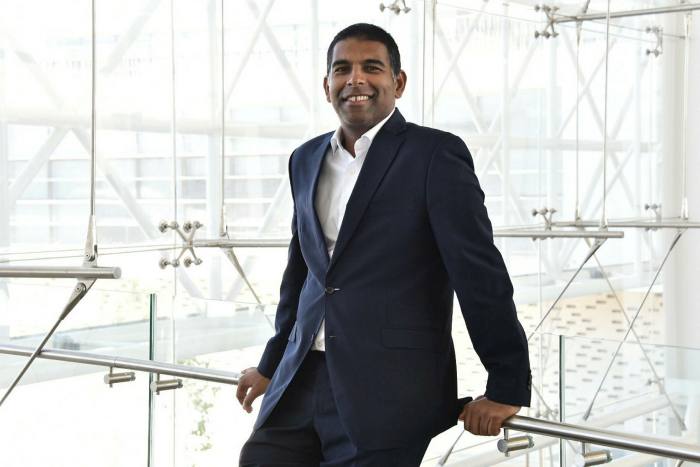
If Germans have struggled to find establishments in their property place exactly where they want to study, Daniel Traça in Portugal has reaped the benefits. As dean of Nova Enterprise College in Lisbon, he has had to introduce a cap to deal with mind-boggling desire.
Throughout its six masters programmes, a third of the 1,600 university student consumption last yr was German, up from a quarter in 2019. ‘We have by no means promoted to the state aggressively but we have had to introduce a restrict to keep range,’ he states.
A single variable has been expanding recognition of Nova overseas considering the fact that it joined the Cems alliance of leading small business universities a lot more than a ten years ago. A 2nd is the somewhat small price tag: charges are identical to individuals in Germany and lower in contrast with rivals elsewhere which includes the British isles and accommodation and other dwelling expenditures are much less expensive.
A different is what Traça calls the ‘Nova way of life’: sunlight, sea and surfing. ‘Our pupils point out the local weather, social everyday living, Lisbon scene and the campus,’ he says. He suggests that its facilities, nimble solution and used curriculum contrast with at times much more standard, theoretical German universities.
But he has made a unique exertion to charm to the most effective German candidates, bringing foremost German-centered companies to recruit domestically, so they have the reassurance of fantastic positions back dwelling after graduating.
But that transformed in the 1990s, suggests Lutz. “We had reunification and the EU’s opening of the industry for goods and work opportunities. German marketplace looked further more afield in expanding globally.”
Without a doubt, Werner suggests German companies are now getting a lot more internationally oriented, growing profits and functions overseas and recruiting foreigners with much more various backgrounds into senior roles at household. This has increased the variety of skills required of executives, boosting need for business instruction. “We have to have unique techniques to be effective in China or Brazil. The world wide footprint of the German financial system has compelled management to increase their skills,” she claims.
Organization teaching is getting to be “more significant”, agrees Oliver Hennig, senior vice-president of operations at BioNTech who also attended ESMT. “It’s envisioned that technical workers likely into managerial roles and negotiating contracts understand what is taking place,” he says.
His business, a pioneer of mRNA vaccines to deal with Covid-19, is part of the country’s expanding commence-up lifestyle. Rocholl at ESMT suggests college students are turning their backs on standard corporate hierarchies and want to perform for newer corporations that are additional inclusive, agile and entrepreneurial. “It will be an interesting fight to see how mature businesses can maintain interesting for youthful expertise.”
If enterprise schools are attracting a expanding number of German college students, they are also raising their reputation and enchantment to foreign pupils for masters’ levels. The state presents the prospect of professions within just Europe’s greatest financial system — and the probability for non-Europeans to achieve get the job done visas throughout the EU immediately after finishing their research.
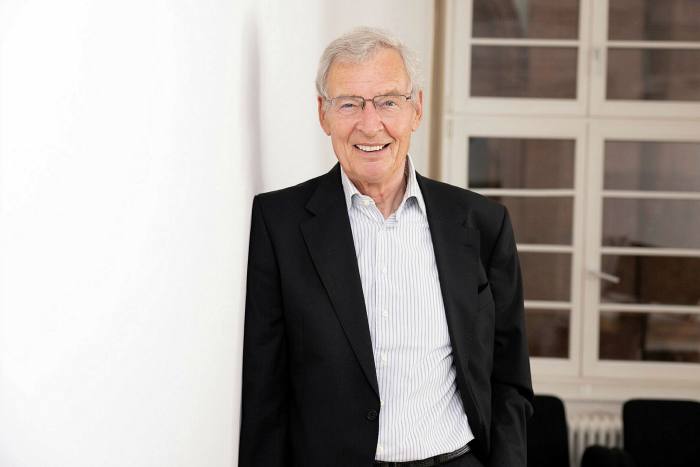
Since Brexit and Covid-19, German enterprise faculties such as Mannheim have obtained in two strategies, suggests Lutz: new desire from international students who will attain access to the EU labour sector no for a longer time open up to people who review in the Uk and domestic students who now desire to remain at dwelling considering the fact that the pandemic started.
“We are centered in Germany but we never see ourselves as a German business enterprise college. Most of our opponents are abroad,” says Rudolf at WHU. He and his peers may perhaps not nevertheless be viewed as strongly as some of its worldwide rivals, but they have ambitions to equal their friends overseas.