
What can business school teach a family firm?
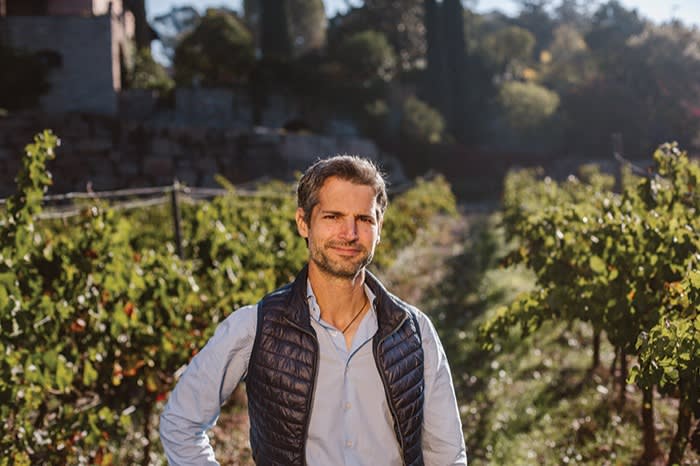
It could be mentioned that Ramon Roqueta was born to make wine. He is the fifth technology of his family to operate Roqueta Origen, a group of wineries in Catalonia, north-east Spain. In 1898, his excellent-excellent grandfather founded the initial of the family’s four wineries, but the business’s origins date back even further more.
Historical information exhibit that Roqueta’s ancestors commenced generating wine at the Masia Roqueta farmhouse, in the Bages region north of Barcelona, in 1199. More than 800 yrs afterwards, the company’s headquarters are on the identical site.
Roqueta turned to Iese Business Faculty in Barcelona to get ready for his eventual succession. Immediately after teaching at wineries in France, Australia and the US, he enrolled on the Iese MBA in 2005 to sharpen his business and management expertise. “It’s not only about generating wine, but selling it and generating the business profitable,” he points out.
Immediately after graduating in 2007, Roqueta worked in consulting, then took up a administration purpose in the family business in 2009. It was about this time that he enrolled in Iese’s Alumni Finding out Software, a series of no cost teaching sessions concentrating on distinct locations of business. More than numerous yrs, he took classes on family business challenges such as succession scheduling and controlling family conflicts.
He learnt how to develop a family protocol, a doc that codifies the business’s values, eyesight and mission, alongside with rules of ownership, governance and administration. The procedure involved the various family users, which strengthened unity. “This has been a competitive gain for the firm around the generations,” claims Roqueta, who took around from his father, Valentí, as chief executive in 2014.
Other business educational facilities are emulating Iese by launching classes that aim on the wants of family companies, which are inclined to choose a long-time period outlook on investments in its place of chasing quarterly returns. Spouse and children companies normally have robust stakeholder associations and extra faithful workforces than other corporations. They are also normally extra hazard-averse and carry significantly less personal debt.
“We can learn numerous things from family companies,” claims Allan Discua Cruz, director of the Centre for Spouse and children Business at Lancaster College Management Faculty in north-west England. “There are so many ideas and dynamics that are well worth comprehending, such as business continuity, legacy, stewardship and resilience.”
Some academics say that each individual business student must learn about family business. “With the bulk of economic action and personal sector employment in many European nations around the world created by family companies, it is really probable that our graduates will be doing work for one particular at some level,” claims Marta Elvira, chair of family-owned business at Iese.
She notes an enlargement of vocation prospects, which includes at the escalating ranks of family offices, in addition to employment at corporations that service family companies, such as banking institutions and consultancies. Other, extra entrepreneurial, college students are interested in establishing new business dynasties.
Business educational facilities in Europe are thus sharpening their aim on family enterprises, which make up 60 for each cent of the region’s corporations — from smaller companies to multinationals such as Exor, the financial investment firm owned by Italy’s Agnelli family, and Germany’s Volkswagen, the carmaker controlled by the Porsche and Piëch households.
Morten Bennedsen, academic director of the Wendel Global Centre for Spouse and children Business at Insead business college in France, points out that family business research only emerged as an academic field in the nineteen eighties. “Business educational facilities have not ordinarily centered on family corporations. That is switching as awareness grows,” he claims. A lot of business people still do not consider their households will need a business education, Bennedsen claims, but provides: “As these corporations scale, there is a will need to professionalise the administration and governance. That is what you are unable to learn from the family.”
About 10 for each cent of the one,000 MBA college students who enrol at Insead each and every yr are from family-owned corporations. Typically, they are heirs, although existing owners choose element-time executive classes to tackle the pressures of preserving a family legacy. Insead features a family business elective in its MBA, in addition to an executive programme that addresses the challenges these corporations deal with.
Spouse and children companies are sometimes mentioned to be especially resilient for the duration of crises, but the research is inconclusive. Daniela Maresch and Matthias Fink at France’s Grenoble Ecole de Management discovered that such companies noted appreciably extra economic losses than other folks for the duration of the pandemic. The original stabilising result of family involvement can flip into a legal responsibility as crises unfold, the professors say, as the burden of obligation ignites family conflict.
Milan’s SDA Bocconi Faculty of Management options to launch new executive classes for family companies next yr. “There is now a more robust aim on hazard mitigation and resilience,” claims Alessandro Minichilli, professor of company governance at the college. “The need for business education in locations like succession scheduling, sustainability and governance is substantial.”
Rania Labaki, head of the Edhec Spouse and children Business Centre in Lille, France, points out that only thirty for each cent of family enterprises make it to the 2nd technology, with the survival fee dropping precipitously with each and every succession.
The biggest transfer of prosperity on record is envisioned in the coming 10 years as baby boomers retire. In Europe, at least $three.2tn will improve arms by 2030 and, in many European economies, the amount of family business leaders around 70 has been mounting in the earlier 10 years.
Labaki believes succession is where business educational facilities can genuinely make a variation: “Young heirs frequently deal with a problem of legitimacy, and they will need our competencies to lead the family business,” she claims.